Wolf range not working? Orange County service call and what it could mean
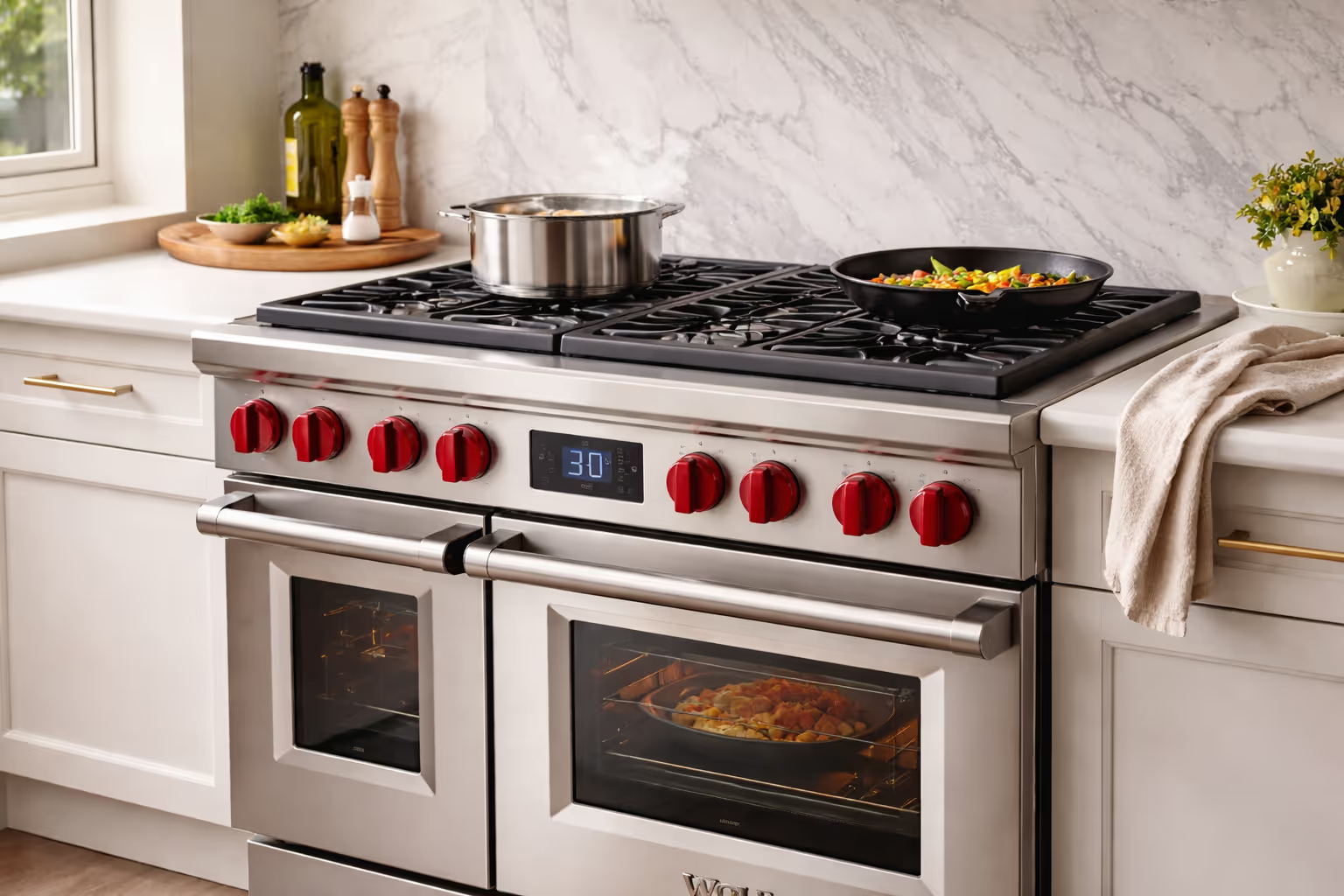
When a Wolf Range Stops Working, It's Rarely a Minor Issue
Wolf ranges are engineered for serious cooking performance — but when something starts going wrong, the problem almost always needs professional attention. Homeowners throughout Orange County call us when their Wolf range stops heating properly, burners click without igniting, or oven temperatures become unreliable.
With premium appliances like Wolf, early warning signs matter more than they do with standard residential ranges. A component that's starting to fail doesn't just affect performance — it can accelerate wear on surrounding parts and turn a straightforward repair into a significantly more involved one.
Real Wolf Range Repair Service Call in Orange County
We recently completed a Wolf range repair in Orange County for a homeowner who noticed their oven was taking much longer to preheat than usual and food was cooking unevenly across the rack.
What We Found
After a full inspection of the unit, our technician identified a failing igniter that was no longer drawing enough current to open the gas valve consistently. The range still appeared to work — it would eventually light and heat — but the igniter had degraded to the point where heating performance had become unreliable and unpredictable.
How We Fixed It
We replaced the faulty igniter with the correct Wolf replacement component, ran a complete heating cycle to verify normal operation, and confirmed that preheat times and temperature distribution had returned to factory specification. Same-day repair from diagnosis to confirmed resolution.
This is a pattern we see regularly with high-end gas appliances — a component that's failing gradually produces symptoms that seem manageable until the day it doesn't work at all.
Warning Signs Your Wolf Range May Need Repair
Don't wait for a complete breakdown before calling for service. These symptoms typically indicate a component that's already failing:
Oven Not Heating or Taking Too Long to Preheat
A preheat time that's significantly longer than it used to be is one of the most reliable early indicators of igniter degradation — particularly on gas ovens where the igniter must reach a specific temperature to open the gas valve.
Burners Clicking But Not Igniting
Repeated clicking without a flame means the igniter is trying to fire but can't complete the ignition. Moisture around the igniter, a dirty burner port, or a failing ignition component are the most common causes.
Uneven Cooking or Temperature Swings
Food that cooks inconsistently — one side done while the other is underdone, or dishes that take different amounts of time than they should — usually indicates a temperature sensor that's drifting or a heating component that's no longer producing consistent output.
Gas Smell During Operation
Any gas odor during or after operation should be treated as urgent. This is not a symptom to monitor — it requires immediate professional inspection.
Control Panel or Display Behaving Inconsistently
Buttons that don't respond reliably, settings that reset unexpectedly, or a display showing incorrect information all point to electronic control faults that affect the entire appliance.
Can a Faulty Wolf Range Become Dangerous?
Yes — and this is an important reason not to delay service on a gas range that's showing problems.
Gas ignition issues, overheating components, and electrical faults can create real safety concerns if the appliance continues to be used. Delayed ignition — where gas builds up before finally lighting — is one of the more common and more serious consequences of a degrading igniter. Overheating components and electrical failures carry their own risks.
If your Wolf range is showing any of the warning signs above, the safer and more cost-effective approach is to schedule professional range repair service early rather than waiting for a complete failure.
Why Professional Wolf Range Repair Matters
Wolf appliances are not standard residential equipment. They use high-performance components, proprietary systems, and specifications that differ meaningfully from consumer-grade ranges. Misdiagnosing the problem or installing an incorrect replacement part can cause further damage — and in some cases, void remaining warranty coverage.
Professional Wolf range repair in Orange County means working with a technician who understands these systems, uses the correct diagnostic approach, and installs components that meet Wolf's specifications. The result is a repair that restores both performance and safety — not just one of the two.
Frequently Asked Questions
Why does my Wolf range stop heating properly?
A Wolf range that heats slowly or inconsistently is most commonly dealing with a failing igniter, a drifting temperature sensor, or a gas flow issue. In many cases the appliance still appears to function — it just takes longer or produces uneven results. This is almost always an early warning sign of a component that should be addressed before it fails completely.
Is it dangerous to keep using a Wolf range that isn't working correctly?
Yes, it can be. Ignition problems, inconsistent heating, and any gas odor all indicate conditions that carry safety risk if the appliance continues to be used. Gas appliances rely on precise ignition and controlled gas flow — when either is compromised, the potential for delayed ignition or overheating increases. Stop using the appliance and schedule an inspection.
Why are my Wolf burners clicking but not igniting?
Continuous clicking without flame means the ignition system is attempting to fire but can't complete the cycle. The most common causes are moisture around the igniter, debris in the burner port, or a failing ignition component. This problem typically worsens over time — the sooner it's diagnosed, the simpler the repair tends to be.
How much does Wolf range repair cost in Orange County?
Cost depends on the specific failure and the components involved. Igniter replacement is typically one of the more straightforward and affordable Wolf repairs. Control board failures and internal component issues are more complex. A professional diagnosis is the only reliable way to understand actual repair cost — and it prevents paying for parts that aren't causing the problem.
Do Wolf ranges require specialized repair?
Yes. Wolf appliances are precision-engineered premium equipment that requires technicians familiar with their specific systems, components, and specifications. A general appliance repair approach applied to Wolf hardware frequently results in misdiagnosis or incorrect parts installation. Work with a technician who has specific experience with Wolf appliances.
What are the most common signs my Wolf range needs repair?
Slow preheating, uneven cooking results, burners that hesitate or won't ignite, unusual noises during operation, any gas odor, and control panel inconsistencies are all signs that something specific has changed inside the appliance. Even if it's still technically working, these symptoms indicate a component that's failing — and acting on them early is almost always less expensive than waiting.
Can a small issue turn into a bigger problem if I wait?
Consistently, yes. A weak igniter that's allowed to continue operating stresses the gas valve; it's failing to open properly. A temperature sensor that's drifting causes the control board to compensate in ways that put additional load on heating components. Small problems in precision appliances rarely stay small — they create secondary failures in the components that are trying to compensate for the original fault.
.svg)