Why Is My Thermador Oven Temperature Not Accurate?

Why does my oven say 350°F but bake like it's hotter or cooler?
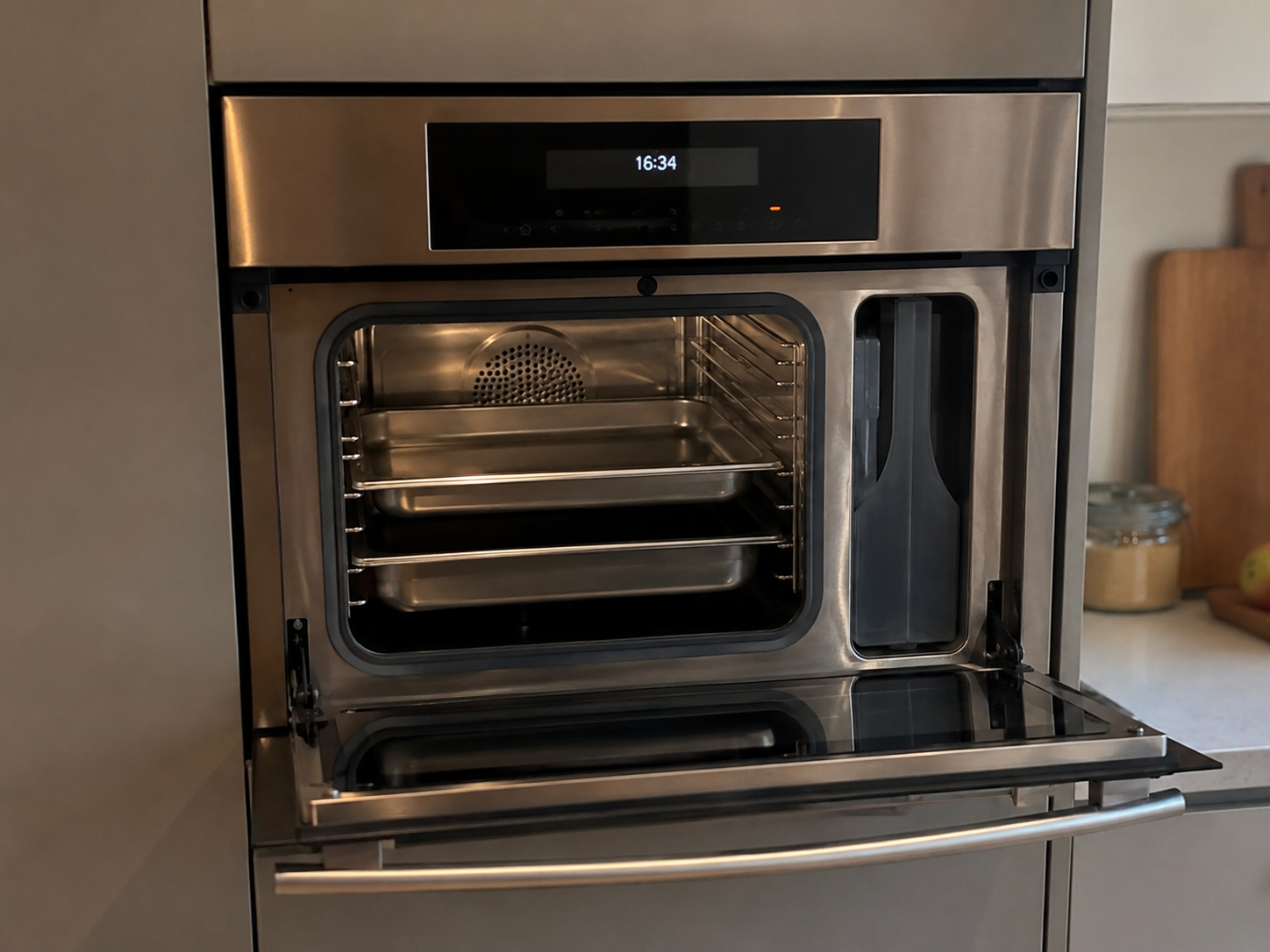
A homeowner near Foothill Boulevard in Rancho Cucamonga called us with a problem that's genuinely hard to diagnose yourself: her Thermador wall oven preheated normally, displayed the temperature she set, and never threw an error code. But everything she baked was coming out wrong. Cookies were browning too fast on the edges while staying raw in the middle. A cake that should have taken 35 minutes needed almost 50. She'd started second-guessing her own recipes before she called us.
The short answer: when an oven shows the right number but doesn't bake like it, the oven's actual internal temperature has drifted away from what the display reports — usually because of a temperature sensor that's reading incorrectly, or because the oven has lost its factory calibration over time. This is different from an oven that won't heat at all, and it's much harder to notice because nothing looks broken.
This is not the same problem as "oven not heating"
It's worth separating these two issues clearly, because the causes and fixes are completely different:
- Oven not heating at all — no heat is produced, the oven never reaches temperature, sometimes with an error code. Usually a failed heating element, igniter, or thermostat that's stopped working entirely.
- Oven temperature not accurate — the oven heats normally and reaches the set temperature, but the actual internal temperature is consistently higher or lower than what's displayed. Food bakes too fast, too slow, unevenly, or burns on the outside while undercooked inside.
If your oven is heating and you're just getting inconsistent results, you're dealing with the second problem — and it's almost always fixable without replacing major components.
What causes a Thermador oven to run hot or cold
Temperature sensor (RTD probe) drifting out of calibration
Thermador ovens use a resistance temperature detector — a thin probe mounted inside the oven cavity, usually toward the back or top — to continuously monitor the actual air temperature and report it to the control board. The board uses that reading to cycle the heating element on and off to maintain the set temperature.
Over years of use and thousands of heating cycles, this sensor can drift. It might report 350°F to the control board when the actual cavity temperature is closer to 375°F or 325°F. The oven isn't malfunctioning in an obvious way — it's faithfully maintaining whatever the sensor tells it, which is the part that's wrong.
On the Rancho Cucamonga call, this was exactly the issue. We tested the actual cavity temperature with a calibrated reference thermometer against the oven's own display and found a consistent 22-degree gap — the oven was running noticeably hotter than the display indicated, which explained the over-browning and uneven results she'd been seeing.
The oven is not actually out of calibration — it's a placement and airflow issue
Before assuming the sensor is at fault, it's worth ruling out something simpler: where food sits inside the oven and how air moves around it. Thermador ovens, like most, have hot spots and cooler zones depending on rack position and whether convection fans are running. A pan placed too close to the back wall or sides can scorch on one side while another part of the same item undercooks, and this can look identical to a temperature accuracy problem from the outside.
If you're seeing uneven results (one side burnt, one side undercooked) rather than the whole dish running uniformly hot or cold, try centering the pan, leaving space around all sides for airflow, and testing a second bake before assuming it's a sensor issue.
Door seal allowing heat loss
A worn or damaged door gasket lets heat escape during baking, particularly noticeable on longer bakes. The oven control system compensates by running the heating element more frequently to maintain set temperature, which can create temperature swings inside the cavity — the air may overshoot the target temperature each time the element kicks back on to compensate for the loss, then dip as it cools between cycles.
Check the gasket around the door for visible gaps, tears, or flattened sections. Closing the door on a piece of paper at multiple points (the same test used for refrigerator and freezer seals) will tell you if it's sealing evenly all the way around.
Control board misreading or miscalculating
Less common, but worth knowing about: the control board itself can develop a fault that causes it to misinterpret a perfectly accurate sensor reading, or to mistime the heating element's on/off cycling. This typically presents with more erratic, inconsistent results from bake to bake rather than a steady, predictable offset in one direction.
How to test your oven's actual temperature at home
Before booking a repair, it's worth confirming the problem yourself with a simple test:
- Buy an inexpensive oven-safe thermometer (not an instant-read meat thermometer — a dedicated oven thermometer designed to sit inside during baking)
- Place it in the center of the middle rack, away from the walls
- Set your oven to 350°F and let it fully preheat plus an additional 15 minutes to stabilize
- Check the thermometer reading without opening the door if possible, or check it quickly and close the door right away
- Repeat the check 2–3 times over the next 20 minutes to see if the temperature is holding steady or swinging significantly
A consistent difference of more than 15–20 degrees in either direction confirms a calibration issue. Swinging wildly up and down points more toward a door seal or control board issue rather than a simple sensor drift.
What the repair looked like
- Problem reported: Thermador wall oven preheating and displaying correctly, but consistently over-browning food and requiring shorter cook times than recipes called for
- Diagnosis: Temperature sensor reading approximately 22 degrees below actual cavity temperature, causing the oven to run hotter than displayed
- Fix: Temperature sensor (RTD probe) replaced and recalibrated against a reference thermometer
- Result: Oven verified holding within 3 degrees of set temperature across three test points before technician left
- Time on site: Approximately 70 minutes
Is this worth fixing, or should you just adjust your recipes?
Some people manage around a known temperature offset by mentally adjusting — setting 325°F when a recipe calls for 350°F, for example. That works as a stopgap, but it's an unreliable long-term fix because sensor drift tends to get worse over time, not stay constant. It also means every recipe, cookbook, and instruction you follow needs mental translation, which gets old fast on a $6,000+ appliance that should simply work as designed.
A sensor replacement and recalibration is a relatively affordable repair compared to almost anything else that can go wrong with a built-in wall oven, and it restores the appliance to working exactly as intended.
Thermador oven repair in Rancho Cucamonga
We serve Rancho Cucamonga and the surrounding communities, including Ontario, Chino Hills, Montclair, and Fontana. Our Thermador repair service covers wall ovens, ranges, and cooktops, including temperature calibration, sensor replacement, and full diagnostic testing using reference equipment to confirm accuracy before we leave.
If your oven isn't producing any heat at all rather than running off-temperature, that's a different issue covered in our article on oven not heating properly. The diagnostic fee is waived when you move forward with a repair, and every job carries a 90-day warranty.
Frequently asked questions
Why does my Thermador oven bake unevenly even though it reaches temperature?
This usually means the temperature sensor is reporting an inaccurate reading to the control board, causing the actual cavity temperature to run higher or lower than the display shows. Rack placement and airflow can also cause uneven results that look similar.
Can I recalibrate my Thermador oven myself?
Some Thermador models have a built-in offset adjustment in the settings menu that lets you nudge the temperature up or down by a set number of degrees. This can mask a sensor drift problem temporarily, but if the drift continues to worsen, the sensor itself needs replacement rather than ongoing manual adjustment.
How do I know if it's my oven or my recipe?
Test with an oven-safe thermometer placed in the center rack. If the actual temperature consistently differs from the display by more than 15–20 degrees, the oven is the problem, not the recipe.
Is an inaccurate oven temperature dangerous?
It's primarily a cooking quality and consistency issue rather than a safety hazard, though a significantly hotter-than-displayed oven can increase fire risk with certain high-fat or high-sugar foods, and undercooked meat or poultry from a cooler-than-displayed oven is a food safety concern.
Do you repair Thermador ovens in Rancho Cucamonga same day?
Yes, same-day appointments are frequently available. Call us at +1 (951) 800-4030 or book online.
.svg)