Miele Dishwasher Not Drying? Here's What's Actually Going On
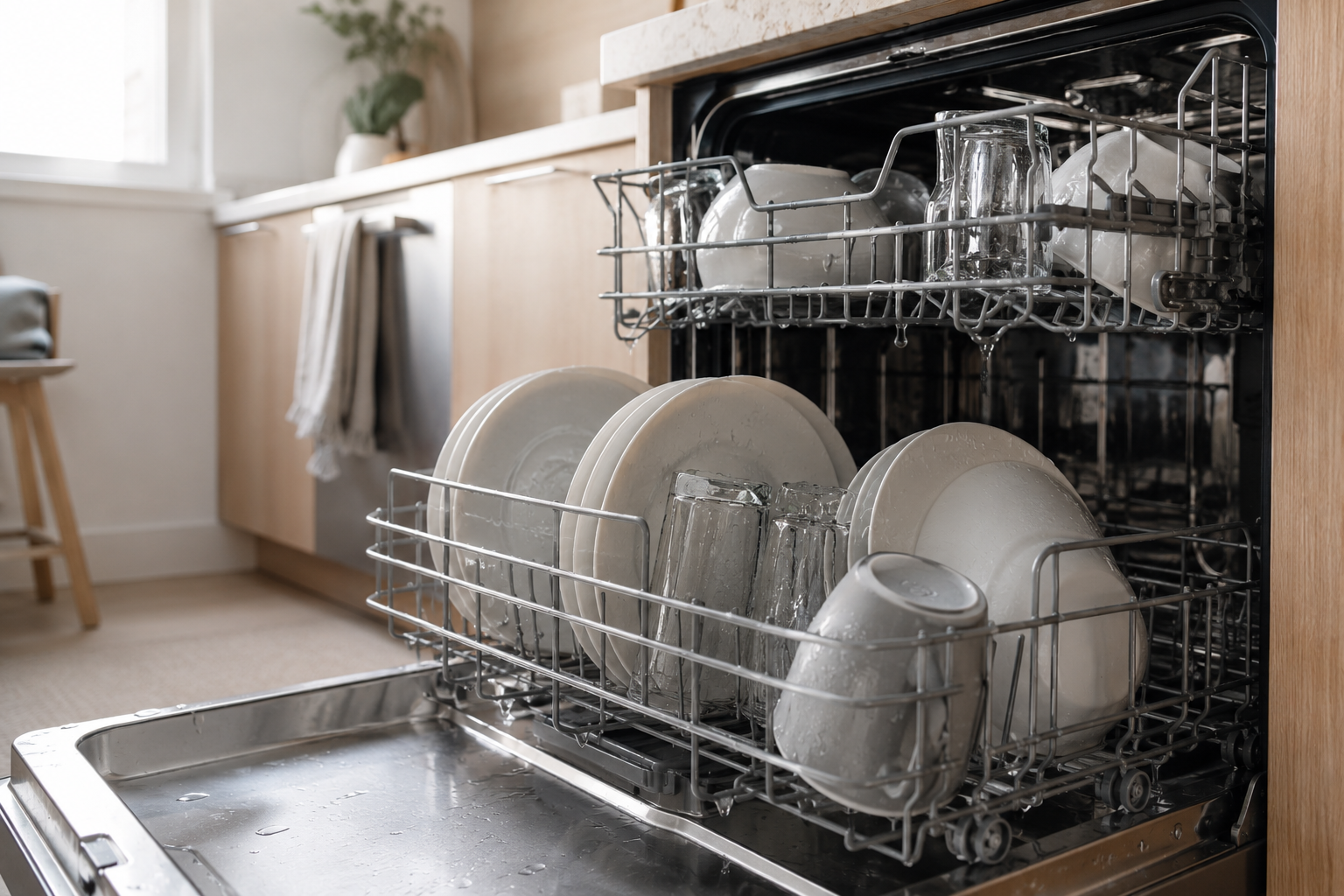
Miele makes some of the best dishwashers on the market, so it is genuinely frustrating to open the door at the end of a cycle and find everything still damp. If you paid a premium for the machine, wet dishes seem like a flaw.
In most cases, it isn't one. Miele dries dishes in a completely different way from the brands most American homes are used to, and once you understand how that works, most drying complaints turn out to have a straightforward cause. Some you can fix in five minutes. A few need a technician.
First, understand how a Miele actually dries
In the US, most dishwashers dry by using a heated element at the bottom of the tub. It gets hot, the water evaporates and that’s it. It works, but it melts plastic containers and uses a lot of electricity.
Miele uses condensation drying instead. There is no heating element running during the dry phase. The machine heats the water during the final rinse, that heat transfers into your dishes, and as everything cools, moisture evaporates off the hot dishes and condenses on the cooler stainless steel walls of the tub. The water runs down the sides and drains away.
Two things follow from this, and they explain most of the complaints we hear:
- Plastic will never dry as well as glass, ceramic or steel. Plastic doesn't hold heat, so there is nothing to drive evaporation. This is physics, not a fault with your machine.
- Everything depends on the final rinse being hot enough and the water sheeting off cleanly. Anything that interferes with either one shows up as wet dishes.
The five most common reasons a Miele dishwasher isn't drying
1. Rinse aid is empty, or the dosage is set too low
This is the single most common cause, and the most commonly dismissed.
On a machine with a heated dry element, rinse aid is a nice-to-have. On a condensation-drying machine it is essential. Rinse aid breaks the surface tension of water so it sheets off in a thin film instead of beading up. Beads sit on the dish and stay there. Sheets run off and drain.
Check the rinse aid reservoir first. If it is full, check the dosage setting. Miele lets you adjust it, and if it has been turned down at some point, or you have switched to a different rinse aid, the amount may no longer suit your water. If you have hard water, and most of the Inland Empire does, you will need a higher setting than the factory default.
2. The door isn't opening at the end of the cycle
Many Miele models use AutoOpen drying. At the end of the program the door releases and swings open a few inches, letting the steam escape so it doesn't condense back onto your dishes. If that door can't open, the moisture has nowhere to go and settles back on everything inside.
Check for anything physically blocking it:
- A countertop overhang that catches the door
- Cabinetry or a toe-kick panel fitted slightly proud
- A dish towel hung over the handle
- Anything stored on the floor in front of the machine
We see the towel one constantly. It sounds trivial and it completely defeats the drying system. If nothing is blocking it and the door still stays shut, the release mechanism has likely failed and needs a technician.
3. You're running a short or eco program
Not every cycle dries the same. QuickPowerWash and the shorter economy programs run at lower temperatures and finish faster, which means less residual heat in the load and less energy available for evaporation.
If drying matters for a particular load, use a full program, or select the Extra Dry option if your model has it. Many owners run Quick by default and never realise it is the reason.
4. The water softener has run out of salt
Miele dishwashers with a built-in water softener need salt, and it is not the same thing as rinse aid or detergent. Riverside County water is hard, so the softener works harder here than in most parts of the country and the salt depletes faster.
When it runs out, minerals stay in the water. That leaves a fine film on your dishes, and water clings to that film instead of running off. The result looks like a drying problem but starts as a water-hardness problem. You will usually see spotting and cloudiness alongside the dampness, which is the giveaway.
Refill the salt reservoir and confirm the hardness setting matches your local supply.
5. The load is packed too tightly
Condensation drying needs air movement and it needs water to be able to run off. Two loading habits sabotage it:
- Cups and bowls facing up. They fill with water during the rinse and hold it. Angle them.
- Items nested together. Two bowls stacked inside each other trap a pocket of wet air that never clears.
If drying got worse after you started running fuller loads, this is probably why.
When it isn't something you can fix
If you have checked all five and the dishes are still coming out soaked, the problem is likely in the machine itself. The usual suspects:
- The flow-through heater has failed. If the final rinse isn't reaching temperature, there is no residual heat to drive evaporation. Dishes come out wet and cool to the touch, which is the clue.
- The temperature sensor is misreading. The machine thinks the water is hotter than it is and ends the rinse early.
- The AutoOpen mechanism has failed. Nothing is blocking the door, but it stays shut anyway.
- The door seal is damaged. Steam escapes during the cycle, taking the heat with it, and the load never gets hot enough to dry.
None of these are DIY jobs on a Miele. The machines are built to tight tolerances, and the parts are model-specific, so guesswork gets expensive quickly. Our dishwasher repair service covers all of them.
A quick diagnostic you can run yourself
Open the door immediately at the end of a full cycle and touch a plate.
- Warm and damp means the heat is working. Look at rinse aid, loading, and whether the door is opening.
- Cool and wet means the final rinse isn't heating properly. That indicates a component failure, which needs service.
That one test will tell you which half of this article applies to you.
Miele dishwasher repair in Riverside
We repair Miele dishwashers across Riverside, Corona, Moreno Valley, Rancho Cucamonga and the surrounding cities. Our technicians work on high-end appliances regularly, so we know these machines rather than treating them as an unfamiliar European brand.
If your dishwasher is coming out cool and wet, or the door has stopped opening on its own, book a Miele repair visit and we will diagnose it properly.

.svg)